I was eating a chocolate muffin when I first saw a seal having its skin cut by a knife, just after being taken out of the water. As this horrid scene continued to be displayed on the classroom’s screen, I began to find my chocolate muffin not so appealing anymore. I remember feeling heartbroken for this poor animal whose life ended so quickly. I wondered how those people could do this without feeling disgusted. It wasn’t until we got to the middle of the documentary that I realized that the Inuit depend on seal hunt to survive. Hearing their side of the story made me open my mind to a whole different part of human life that I had never really payed attention to before. Or was I simply not informed?
Imagine that you are living in a vast territory. The sun rays reflected on the snow make your eyes squint during this glacial morning. You are hungry. A cycle has been interrupted; a lack of balance is settling. Your daily routine has changed, and your people’s economy is tumbling down. You go back inside the house and hear your little sister’s stomach growling. A soft kiss on the cheek is enough to make her smile, but her hunger will last for a while. She waves you goodbye as you watch her through the frosted window, reflecting about how it all started with a simple image. An image that had the power to transform what you believe is right into a horrid act.
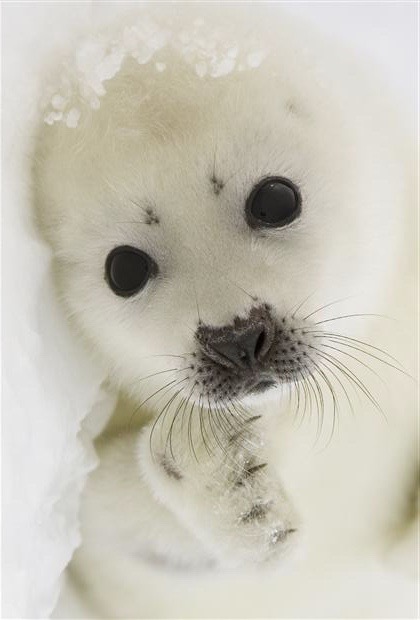
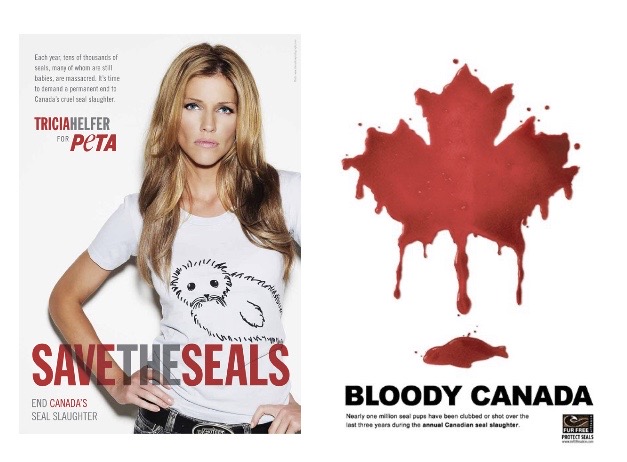
One problem associated with awareness campaigns is the manipulation of the visual content to force an emotional reaction. It is as if the image was programmed to make the viewers feel a certain way while orienting their perception of the content. When I watched Angry Inuk by Alethea Arnaquq-Baril, I realized how this strategy worked. An article by CBC reported that since 1960, animal activists have been trying to shut down the sealskin trade, a tradition that has become a way of life for the Inuit. The activists’ campaigns definitely had an impact as the reputation of seal hunting was ruined. But who can resist to a fluffy baby seal’s pitiful eyes? Almost no one. And the worst part is that those fluffy baby seals depicted on the campaigns’ posters are actually never hunt by Inuit, it is illegal since 1987. After the ban of products targeting only one type of sealskin, the Inuit’s economy fell, and their communities’ suicide rates escaladed becoming the highest in the world! I am still shocked to see that all of this happened with a cute animal’s picture. Alethea Arnaqua-Baril, the creator of the documentary Angry Inuk, said that “When you totally erase Inuit from the picture, it can appear as a black and white issue.” Thus, the anti-sealing campaigns are a great example to show the impact that a simple image can have, and especially when it comes to the general public’s opinion.
Have you ever noticed the difference between seeing with the mind and seeing with the heart? Fairly easy to distinguish, the nuance is key to analyse how a person approaches visual content. For example, you could perceive stars as a diamond dust sparkling the sky. Or, as luminous balls of gas held by their own gravity. Well, this difference isn’t so important anymore when the visual content is shaped to direct the viewers’ perception in a single direction. Sometimes, there is no room for personal interpretation. The red bold letters on the COVID-19 posters are meant to make you feel a sense of danger and urgency just like the rainbow depicted in several social media images can make you feel hopeful. From the font of the text to the colors used, everything part of what we see daily has been thought out by professional communicators to produce a specific emotional response from the viewers. Commonly used in marketing, visual communication strategies reinforce the message presented and aim to tingle your mind leading emotions to guide you towards the desired action, whether it is to donate funds or share the post on your Instagram story.

Speaking of Instagram, it is most likely that your feed has once been invaded by reposts of Bell’s famous mental health campaign Let’s Talk. According to Kyle Dewsnap, the campaign successfully raises funds for mental health initiatives, but does not reduces the prejudice regarding those affected by mental illnesses. He makes another interesting remark in his article by saying that “Unfortunately, being ‘aware’ of this issue isn’t going to stop the discrimination that people with mental illness face.” Yet, this isn’t the only problematic that Bell faces with the campaign. As someone who uses social media daily, this made me reflect on the utility of the posts that I see. I kept wondering if the people behind campaigns like this one actually support the cause that they present. An article by CBC gave me what I was looking for, and the doubt that I had only grew bigger. Bell employees would face anxiety because of high sales targets imposed by managers. The allegations made by more than 600 people are disturbing and include medical interventions due to stress. Even if those allegations only comprise a minority of workers, they are worth looking at and raise another question; do awareness campaigns actually make a difference?

In his article, Dean Burnett distinguishes awareness and action. He writes that “The point is, raising awareness of mental health is all well and good, but it doesn’t automatically follow that the problems and concerns around mental health will be affected in any appreciable way. Many people are “aware” that their clothes are probably made in sweatshops, or that their elected leaders are corrupt, or that their car is harming the environment, but do little or nothing about these things.” Sadly, I can recognize myself in the examples that he gives and probably you too. But, why is that?
It is no secret that information is transported rapidly and continuously to influence audiences in some way. We give meaning to messages projected on screens, and we aren’t always conscious of it. For example, taking the metro can be visually exhausting if we pay close attention to all the images surrounding us. From the advertisement posters in the wagons to the news on the screens, there is an immense amount of information to process. I began thinking that maybe this is the reason why many people do little or nothing about issues presented in awareness campaigns. Maybe subconsciously processing all of this visual information is simply too much.
As I look back at the fluffy baby seal image, I don’t see cuteness. And when mental awareness day will come, I won’t think about reposting a picture. Instead, I’ll try to think about the meaning that I am giving to these messages. I’ll try to see more than just an image and go past what is presented on the surface level. After all, « […] life is like looking into a rear-view mirror. We never fully understand where we’ve been until we are beyond where we were and can contemplate what happened […] » once wrote Marshall McLuhan.
 Alexandra's Nonfiction Writing Blog